Relative Energy Deficiency in Sport (RED-S): What You Need to Know
What is RED-S?
Relative Energy Deficiency in Sport (RED-S) happens when there isn’t enough dietary energy available to support both training demands and basic physiological functions. In simple terms: after exercise has taken what it needs, there’s not enough fuel left to run the rest of your body properly. It might sound like a bit of a niche condition, but it’s shockingly common!
~45% of athletes show signs of Low Energy Availability (LEA)
~61% estimated at risk of RED-S.
This is often the result of chronic under-eating, unintentional energy mismatch, or excessive training without adequate recovery. RED-S exists on a spectrum of what we call LEA, of which there are two sorts:
Adaptable LEA - Short-term, mild energy shortage. Body adapts and recovers once energy availability improves.
Problematic LEA - Long-term deficit where the body makes trade-offs, downregulating key systems (reproduction, bone health, immunity, etc.). This can impair health and performance.
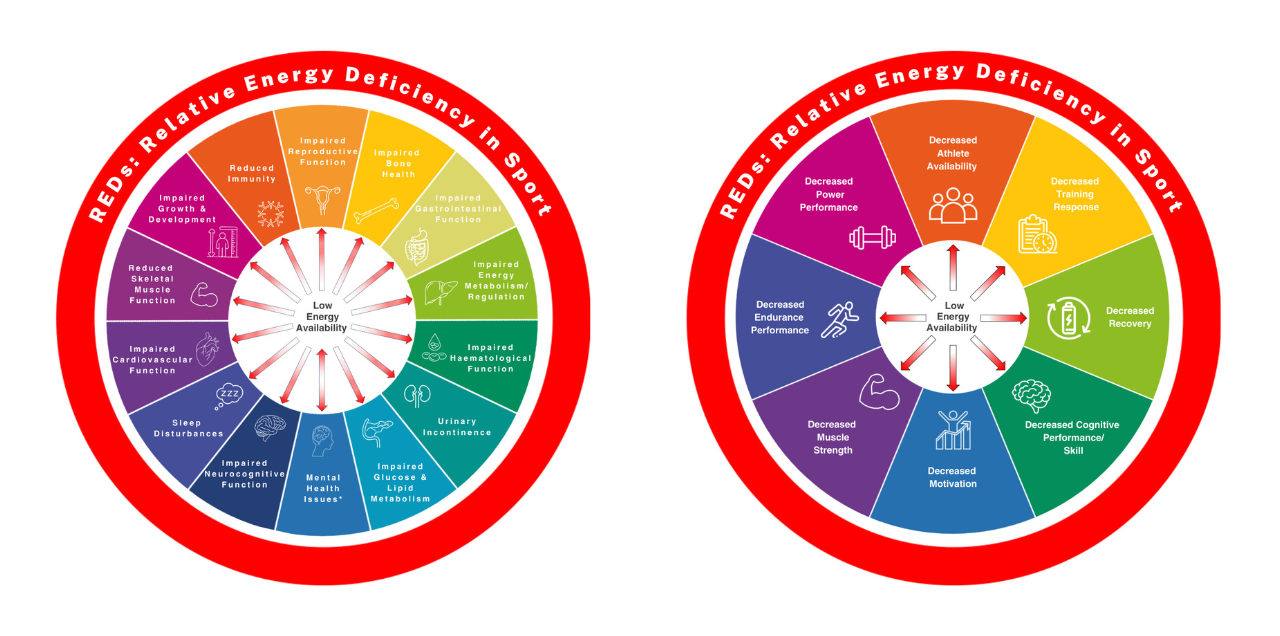
Graphics from Burke et al., BJSM, 2024
So What’s Actually Going On?
When energy availability is too low, the body shifts into what we might call “survival mode”. It reallocates fuel away from what it sees as “non-essential” systems and into core functions like movement and basic metabolic goings-on.
According to the latest physiological model of RED-S (Burke et al., BJSM, 2024), it can affect your:
Reproductive system - Irregular or absent menstrual cycles (amenorrhea), or low testosterone in men.
Bone Health - Increased risk of stress fractures, reduced bone mineral density, reduced bone growth.
Hormonal / Endocrine systems Suppressed thyroid, elevated cortisol, impaired thermoregulation.
Metabolic processes - Reduced resting metabolic rate, slow recovery.
Immune function - Frequent colds & illness.
Psychological / Cognitive function - Irritability, low mood, reduced concentration, reduced drive to exercise/train.
Performance - Training plateaus, chronic fatigue, increased injury risk.
So, all in all, not great!
Who Can RED-S Affect?
Although RED-S is more common in certain athletic populations, it’s important to realise that it can affect any physically active person who consistently under-fuels relative to their training load, and it impacts both men and women at similar rates. Research, though, does highlight increased prevalence in:
Endurance sports (e.g., distance running, cycling); Higher energy expenditure + difficulty compensating with intake.
Aesthetic or leanness-focused sports (e.g., gymnastics, dance, cheer, figure skating); Strong cultural and judging pressures toward low body mass.
Weight-category and combat sports (e.g., boxing, MMA, rowing, powerlifting); Regular “cutting” phases and rapid weight manipulation increase risk.
Physique / fitness sports (e.g., bodybuilding, fitness modelling); Prolonged dieting, low body-fat targets, and repeated calorie restriction.
High-volume recreational athletes; People combining demanding training with busy professional lives often under-fuel unintentionally.
Anyone pursuing long-term calorie restriction; including chronic dieters or individuals trying to “stay lean” year-round.
Important: RED-S is not limited to elite sport. The physiology of it doesn’t care whether you are a marathoner, a CrossFitter, a regular gym-goer, or someone doing spin classes before work; If your energy intake chronically fails to meet your training output, you are clinically eligible.
How to Recognise Risk
If you (or someone you coach) experiences two or more of the following red flags consistently, RED-S is likely something you should consider:
Ongoing fatigue or reduced performance despite consistent training
Irregular or missing menstrual cycles (or low libido in men)
Persistent injury history or recurrent stress fractures
Mood changes, low motivation, or reduced focus
Reduced strength, inability to progress, or plateau despite effort
Unexplained weight loss or inability to build muscle
Poor recovery, frequent illness, or increased resting heart rate.
If you’re concerned, for yourself or someone else, the next step is a undergoing a screening questionnaire…
LEAF-Q (for women) and LEAM-Q (for men) are validated tools to help identify those at risk of RED-S. Both questionnaires are available online - download and complete the relevant questionnaire and score using it’s counterpart scoring guide. The questionnaires focus on menstrual/sexual health, gastrointestinal symptoms and injury history (especially bone related).
Note; a positive screen is NOT a diagnosis, but should prompt referral to a sports medicine professional or sports dietitian.
Management & Recovery
If you do end up with RED-S or LEA, it’ll require a bit of proactive intervention. Quite obviously the primary action will be to increase the availability of energy so your body has what it needs, i.e. more food intake and temporarily reducing training load! Generally, your POA might include:
Increasing energy availability (the suggested primary and most effective intervention)
Raise caloric intake and/or reduce training volume temporarily
Support with sufficient protein, carbohydrate, fats and nutrients.
Review training load and recovery strategy
Monitor key health markers over the medium term (e.g., menstrual cycle, fatigue, HRV, illness frequency)
Use a multi-disciplinary support team if possible
Coach, Sports Dietitian, Doctor, Psychologist…
Education into the future
Sustainable high performance and high energy output require a high enough energy intake
You can’t run a high-performance body on a low-performance fuel strategy!
In Summary…
RED-S is a sneaky one… It can be happening over a long period of time without you really noticing it, so it’s really worth being aware of it and knowing what to look out for. It’s not limited to elite, or even recreational athletes; it can affect anyone, and it impacts both women and men.
Short-term energy deficits, used strategically for bodyweight management, can be pretty useful! Whereas long-term, or chronic, often accidental deficits can derail your progress and impact your health.
Train hard, but fuel hard too. If you suspect RED-S or want help aligning your training and nutrition strategy for health and performance, especially if you’re in a high-demand sport/active hobby or balancing training around work and life, feel free to get in touch or enquire about coaching.
Thanks for reading and feel free to share with a friend if you found this useful!
Key References:
Burke LM et al. (2024) Mapping the complexities of RED-S: Development of a physiological model. PMID: 37752007
Gallant TL et al. (2025) Low Energy Availability and Relative Energy Deficiency in Sport: A Systematic Review and Meta-analysis. PMID: 39485653
Charlton, B. T. et al.(2022) Low Energy Availability and Relative Energy Deficiency in Sport: What Coaches Should Know.
Melin A et al. (2014) The LEAF-Q screening tool for athletes at risk of RED-S. PMID: 24563388
